Who Was Harriet Tubman?
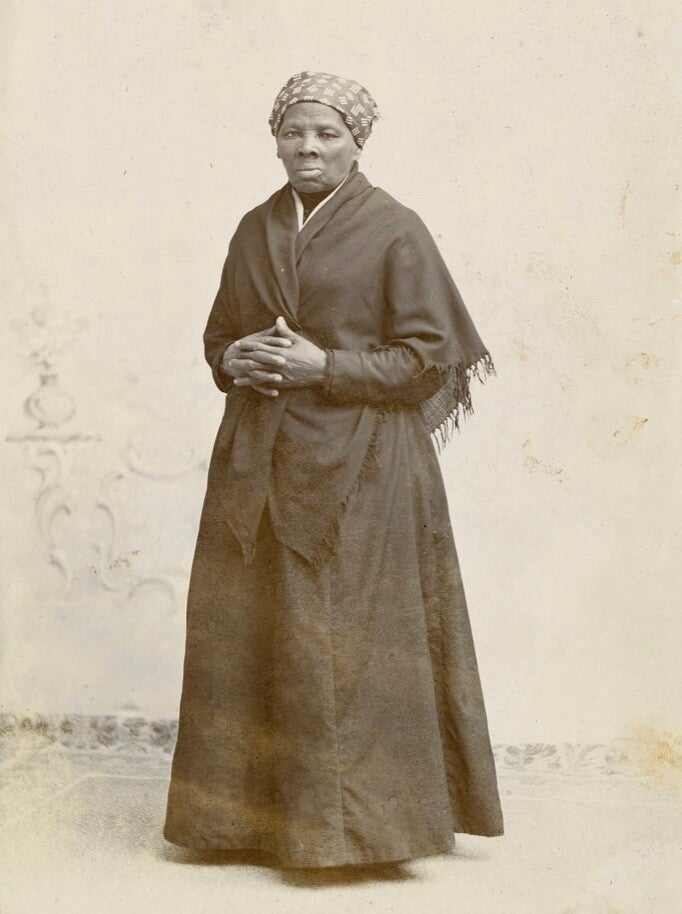
Harriet Tubman was born Araminta “Minty” Ross, enslaved on Maryland’s Eastern Shore. She escaped in 1849 and went on to make roughly thirteen return trips, guiding an estimated seventy people to freedom, including her parents and several of her siblings. She is remembered as “Moses,” but her success depended on more than courage alone. Four things worked together: her knowledge of the land, her calculated approach to risk, her faith, and a network of allies, which you can explore on the Underground Railroad page.
Knowledge of the Ground She Traveled
Tubman knew the land better than the people hunting her.
Her labor around the shipping trades of Dorchester County gave her a detailed picture of the region’s waterways, roads, and hiding places.
- Back channels: She knew the marshes and back channels that slave catchers did not, so she could plan routes around patrols instead of leaving escape to chance.
- Allies on the map: She knew where antislavery pockets existed in the countryside, such as the Quakers and the Choptank Abolition Society in Greensboro, and used them as safe places to rest.
- Natural compass: The streams she knew all ran north to south, which kept her oriented, especially since she traveled at night rather than in daylight.
None of this was luck. It was all calculated, and Clinton’s account of Tubman’s own escape is evidence of it.
Her Own Escape: 1849
Her first escape attempt shows that knowledge alone was not enough.
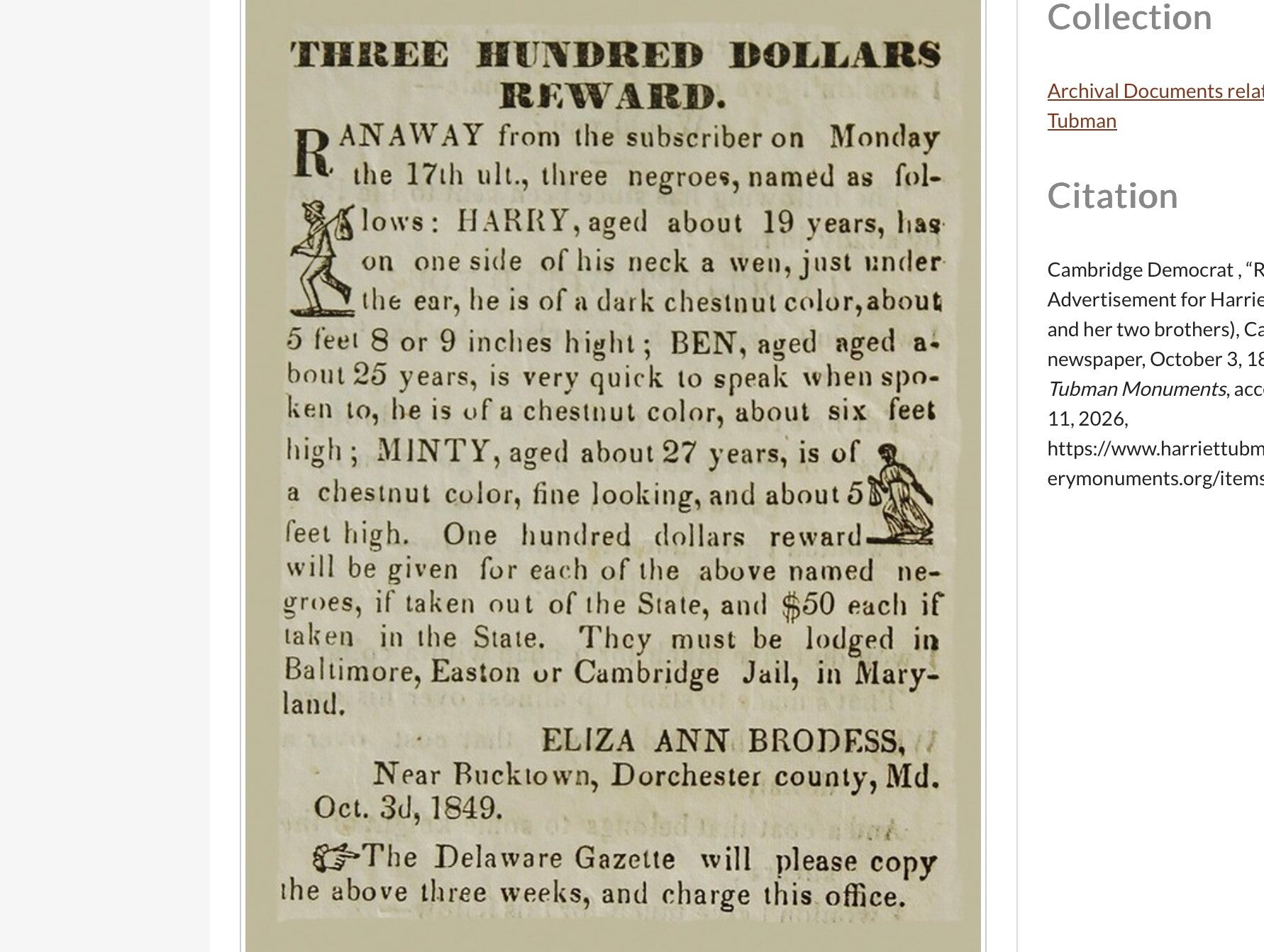
On October 3, 1849, Eliza Brodess placed a runaway ad in the Cambridge Democrat for three people: “Minty” (Araminta, Tubman’s name before she became Harriet) and her brothers Ben and Harry Ross. The ad reports that they had left on “the 17th ult.,” meaning the 17th of the previous month.
An enslaver wrote the ad to recover “property,” not to document a life. Even so, it is solid evidence of her first attempt, and it confirms that she left with her brothers, not alone.
What happened next:
- Out of fear, and without knowing where to go, the three turned back.
- Later that year, Tubman escaped again, this time alone, and reached Philadelphia.
Why it matters: Geographic knowledge was necessary, but it had to be paired with other people’s help to create a trusted route.
Pictured on the left: Eliza Brodess’s reward ad, published after Tubman’s escape.
Calculated Risk
Tubman planned every mission around the seasons, the news cycle, and the risks.
- Seasonal rhythm: She earned money in the spring and summer to fund her trips, planned in the fall, led a large party out, then stayed in Canada for the winter.
- Saturday-night departures: Runaway notices could not be printed in newspapers until Monday, which gave her a head start.
- Changing routes: After the Fugitive Slave Act made Philadelphia and much of the North unsafe, she began bringing people all the way to Canada, with St. Catharines, Ontario, as her home base.
- Disguise and diversion: She prepared a change of costume or a diversion, sometimes posing as an elderly woman or a man, even when she ran into former enslavers.
- A firearm: She carried one for protection and to keep frightened or wavering members of her party from turning back and endangering the group. William Still recorded that a live runaway who went back could do great harm, while a dead one could tell no secrets.
A Mission With No Margin For Error: The Ennals Family
One rescue shows how thin the line between success and capture could be.
Tubman set out to rescue her sister Rachel and Rachel’s two daughters. When plans changed, she brought the Ennals family to safety instead.
How it unfolded:
- She stopped at the home of a Black stationmaster she knew, but a white man opened the door instead.
- Her party hid in a swamp to avoid patrols.
- A Quaker man who happened to be walking nearby directed them to a barn where a horse and wagon were waiting.
- The group reached Wilmington and then Philadelphia.
The mission became known as a miracle and a “prayer of faith.” It also shows the network at work: when one link failed, another appeared.
Religious Conviction
Faith was the tie that held everything else together.
Clinton argues that Tubman’s reputation as “Moses” came from a deep belief that God had personally called her. Tubman described God speaking directly to her and having recurring dreams of flight to freedom.
Faith in practice:
- Songs as signals: She used gospel songs with coded messages to signal to fugitives on the road. One song warned her party to stay hidden, and she changed to a joyful refrain when the danger had passed.
- Confidence to return: Her faith gave her the confidence to go deep into Maryland again and again.
- Reason to trust her: It gave her followers a reason to trust a woman who, in William Still’s impression, looked ordinary on the outside but had immense inner courage.
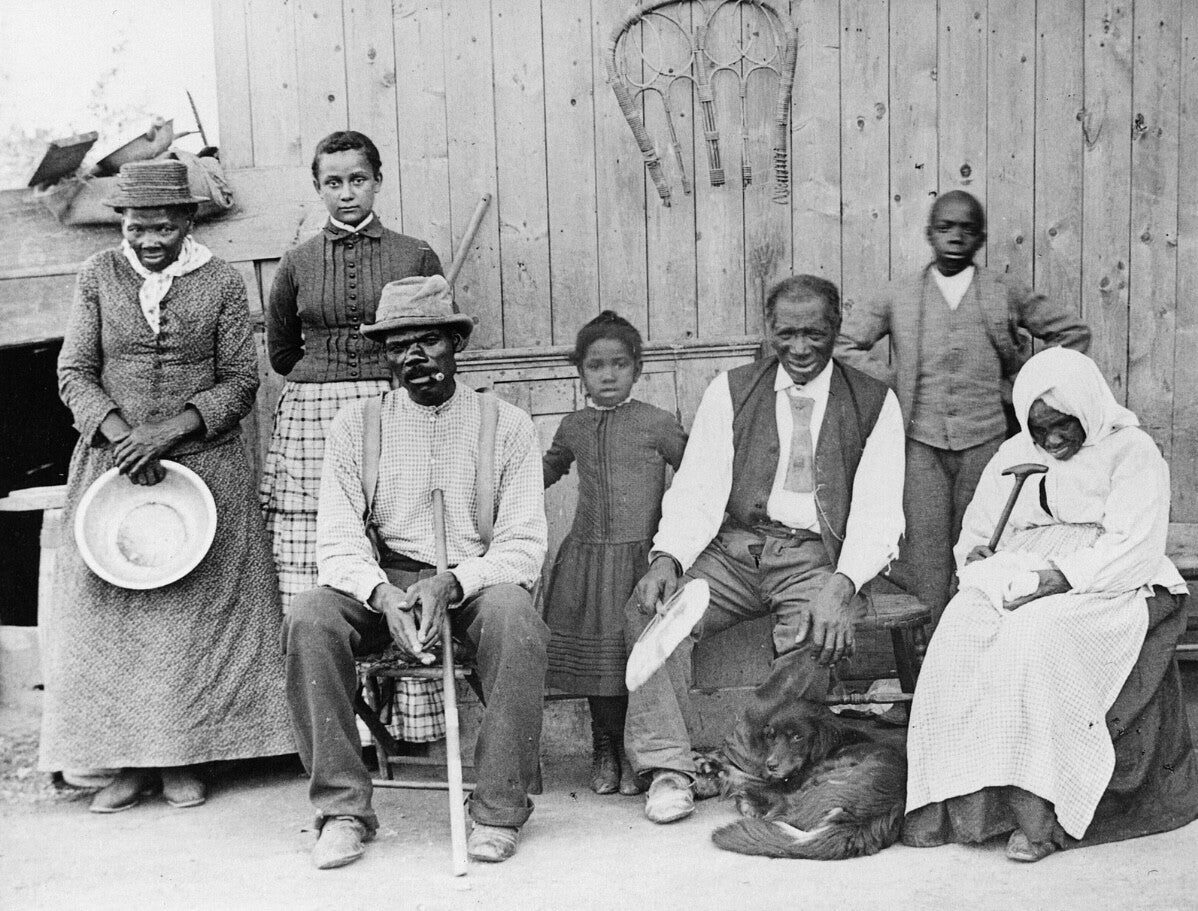
Pictured on the left: Tubman with a group of people she helped to freedom. Source: New York Times.
Create Your Own Website With Webador